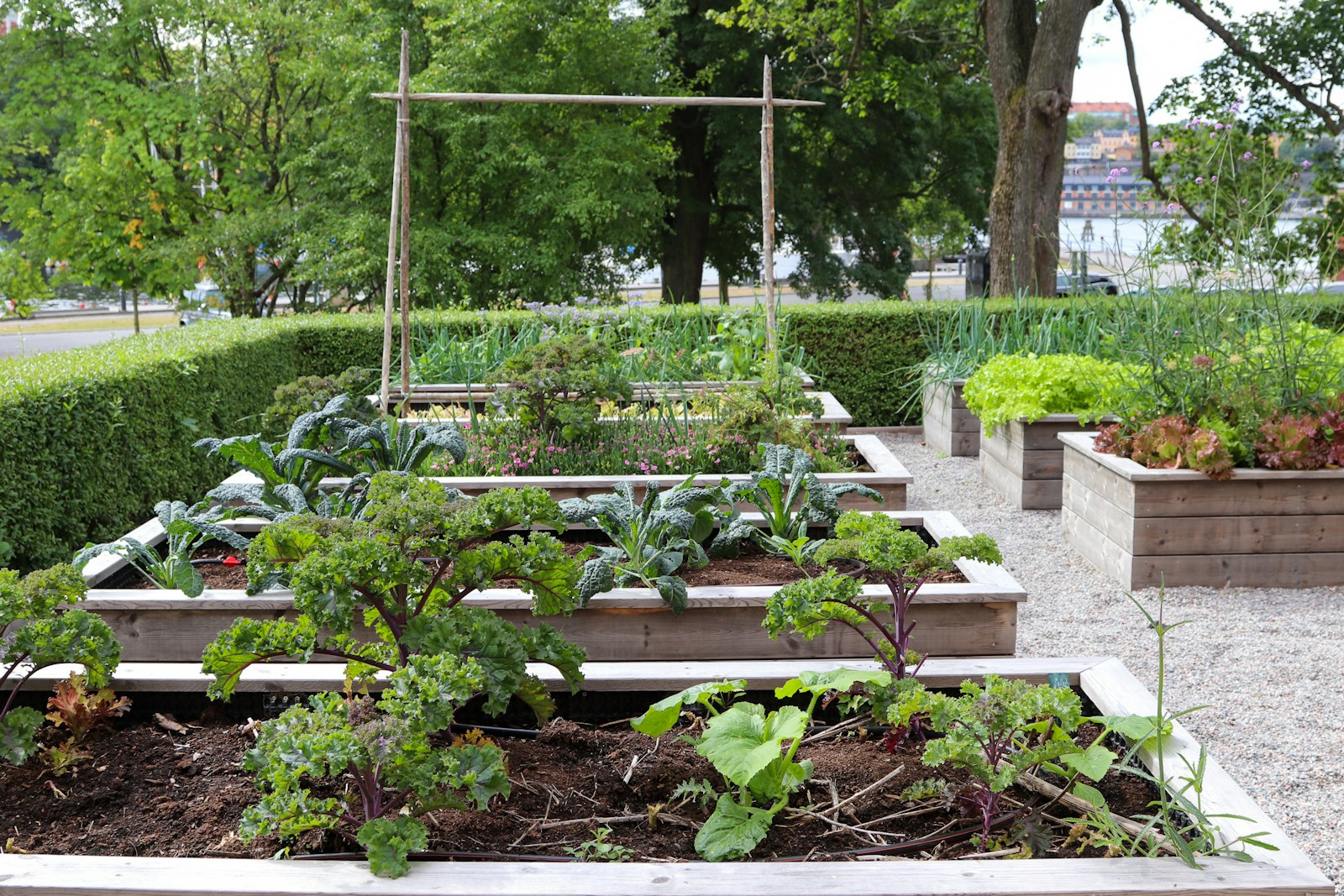
A shady yard does not have to mean giving up on growing food. But it does change what you can reasonably expect. The important distinction is between partial shade, where crops still receive several hours of direct sunlight, and deep shade, where productive vegetable gardening is much harder.
Instead of treating every plant as equally shade tolerant, first measure the light in the spot you have. Then match the crops to that exposure.
How much direct sun does your garden actually get?
Observe your intended planting area on a clear day. Note when direct sunlight reaches it, when shadows arrive and whether the light is broken up by trees. Repeat your observations later in the season because the sun’s position and tree canopy can change the pattern.
Iowa State University Extension explains that most edible gardens benefit from at least six hours of direct sunlight, but some crops can be grown with more limited light. Its guide to growing edible plants in shady areas distinguishes partial sun from heavy shade. These are useful categories, not a guarantee of yield.
Leafy vegetables are the strongest starting point
Leafy greens are often a better choice for limited sun than plants grown for fruit. Iowa State Extension names lettuce, spinach, Swiss chard, kale and collards as candidates for partial-shade gardens. Its partial-shade vegetable answer notes that some leafy crops can succeed with roughly three to four hours of sunlight.
In a hotter summer garden, afternoon shade can also change leaf quality and heat stress. Results still depend on your variety, temperature, spacing and watering. Begin with a small planting rather than using your whole shaded bed at once.
What about roots, peas and broccoli?
Radishes, beets, kohlrabi, broccoli and some other cool-season vegetables may be worth testing in partial shade. Compared with full sun, growth can be slower, harvests smaller or the plants less reliable. Read the seed packet and track what happens in the part of your garden you choose.
A crop that produces leaves in limited light will not necessarily form the same size roots, heads or pods as it would in a sunnier position.
Save the sunniest spaces for fruiting crops
Tomatoes, peppers, cucumbers and squash generally need substantial direct sun to flower and produce well. Oregon State University Extension recommends six to eight hours for fruiting vegetables in its vegetable gardening guide.
If you have one sunny strip and several shady beds, give that sunny strip to the crops with the greatest light demand. If the space receives almost no direct sun, consider shade-adapted ornamentals or another use instead of promising a productive vegetable harvest.
A simple test before you commit a whole bed
- 1. Record the sun: track direct-light hours for a few days and note changing shade from trees or buildings.
- 2. Pick two suitable crops: choose leafy greens or another partial-shade candidate supported by a growing guide.
- 3. Check your soil and drainage: poor growth can be caused by more than the amount of sun.
- 4. Compare results: note germination, growth, pests and the size and timing of the harvest.
- 5. Adjust next year: move demanding crops to brighter areas and keep what worked.
Special consideration: a north-facing garden
A north-facing yard in Canada may have less direct sun near the house or a fence, but its exact exposure depends on obstructions, season and local layout. Measure rather than assuming the entire yard is unusable. Different corners can receive different light.
Keep your own evidence
A brief note about where a crop grew, how many hours of sun it received and how it performed turns a trial into practical knowledge. For a wider approach to tracking your garden, read our garden journal guide once it is available.
Sources
- Iowa State University Extension: Growing Edible Plants in Shady Areas
- Iowa State University Extension: Vegetables in Partial Shade
- Oregon State University Extension: Vegetable Gardening
Explore growing-space decisions
These supporting guides help you assess a particular location and keep the observations needed for next season.