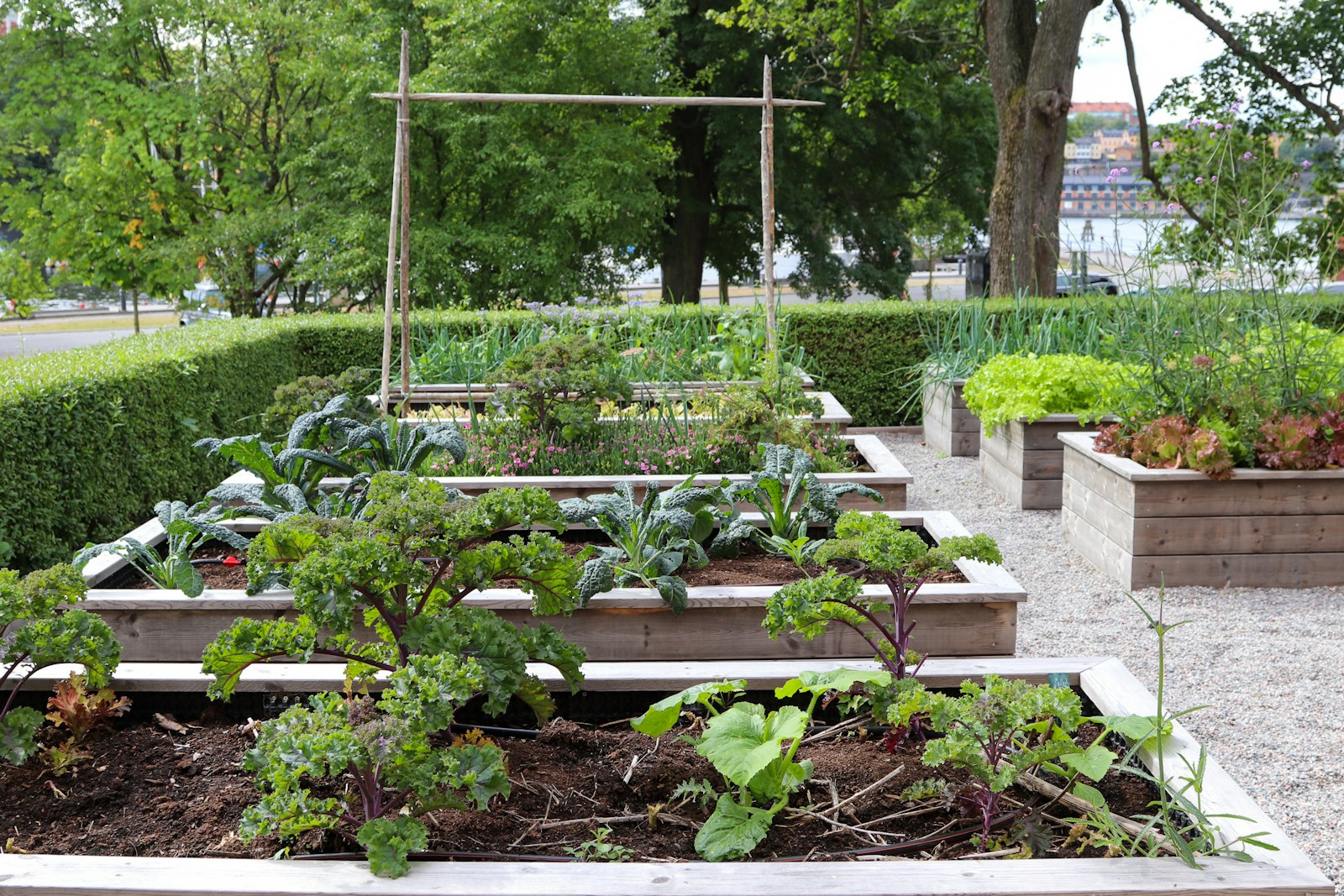
The most useful sun map of your garden is one you have actually observed. A compass direction or an estimate like “pretty bright” may not reveal when direct light reaches a bed, or how the exposure changes after trees leaf out.
Make a simple map
Sketch your growing areas. Label the beds or containers, then mark nearby fences, buildings and trees. A phone photograph or a rough drawing on paper is enough. The goal is to make your observations repeatable, not to produce an architectural survey.
Record direct sunlight in time blocks
- On a clear day, check the site in the morning, late morning, early afternoon and late afternoon.
- Write down when each bed receives direct sun and when shadows begin.
- Count actual hours of direct sunlight separately from bright but indirect light.
- Repeat when deciduous trees fill in, or after a noticeable seasonal change.
- Add notes for areas that move from sun to shade quickly.
Iowa State University Extension recommends full-sun exposure for most vegetable growing and explains why limited light changes expected productivity in its shade gardening guide. Your map turns that general advice into a decision about a particular growing area.
Example: two beds with the same address
Bed A receives morning sun until early afternoon. Bed B sits behind a fence and only catches the last two hours of direct sun. Both are in the same yard, but they should not automatically be assigned the same crops.
Use the record for a crop decision
Reserve the brighter bed for fruiting vegetables. Test a small planting of suitable leafy greens in a partially shaded area. Where sunlight is too scarce for edible crops, choose another use rather than expecting a productive vegetable harvest.
Our vegetables in shade guide helps compare crop requirements. Keep the crop, variety and harvest information in a garden journal alongside the light map.
Revisit your conclusions
At the end of the season, compare actual light with plant growth and harvest. The same hours of sun can have different results depending on temperature, soil, moisture and crop variety. Use the observation to choose next year’s location, but keep measuring as conditions change.