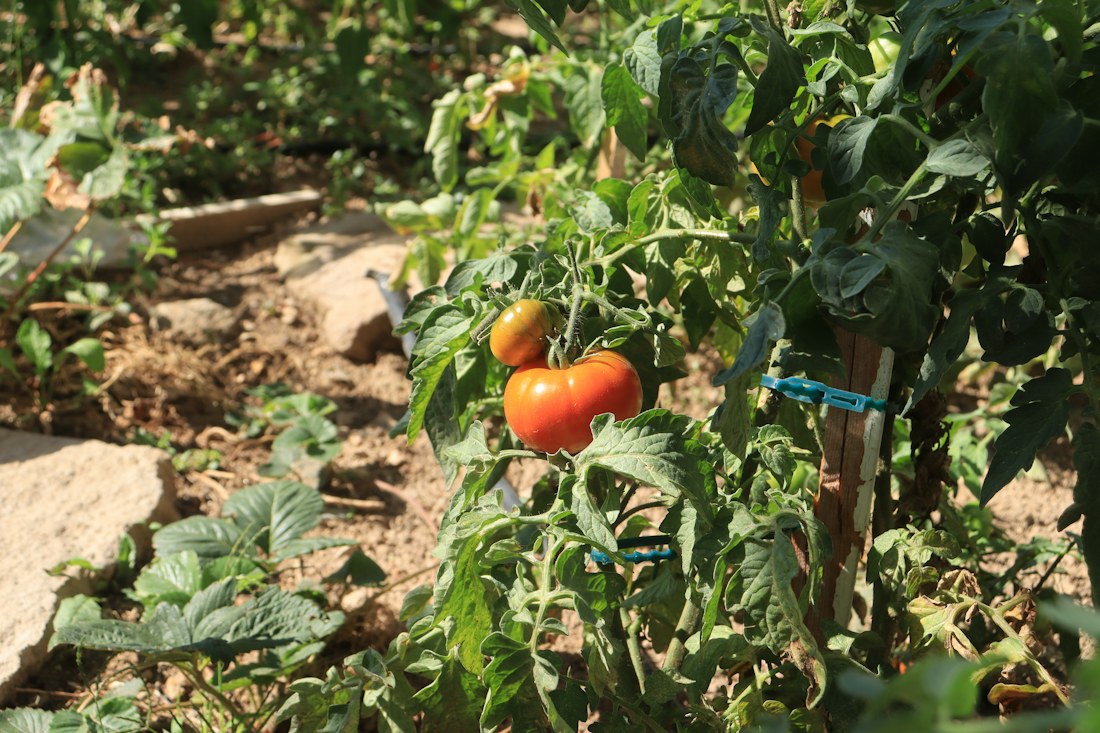
Rain may supply a tomato plant with enough water for a while, but the sound of rain on the roof is not proof that water soaked into the root zone. Rainfall intensity, mulch, soil texture, containers, slope and prior dryness all affect what happens next.
Start with the ground, not the rainfall total
A brief shower can wet foliage and the first layer of soil while leaving deeper roots in dry conditions. A heavy downpour can run off compacted or sloping beds. Conversely, prolonged rain may leave a container or heavy soil too wet.
The University of Minnesota tomato guide recommends checking how deeply the soil is wet. It notes that tomato water needs also vary with soil texture and that sandy soils may require more frequent watering.
Three useful checks after a rain
- Depth: use a trowel or finger to examine moisture below the surface.
- Drainage: look for standing water, saturated soil or pots without free drainage.
- Weather ahead: consider upcoming heat and wind without treating a forecast as a direct measurement of the soil.
What if the tomato looks wilted?
Wilting is not a reliable stand-alone moisture meter. A hot afternoon may cause temporary stress while the soil remains moist. More concerning are plants that fail to recover or are wilting in already wet, poorly drained soil. Investigate before applying additional water.
Keep foliage and roots in mind
Wet leaves can favour some tomato leaf diseases. The University of Minnesota Extension leaf spot guide recommends watering soil rather than foliage and allowing good air movement. Rain itself is unavoidable, but additional overhead spraying is usually unnecessary.
Make a conditional decision
- If the root area is adequately moist and drainage is good, wait and check again.
- If the top is wet but the root zone remains dry, water the roots as needed.
- If the soil is saturated or waterlogged, do not add more; address drainage concerns appropriately.
- If rain is forecast but has not fallen, do not assume the plant has already received it.
The same approach applies to the question Should I water my garden today?. It requires checking the actual conditions rather than a universal watering timetable.
Learn how your garden responds to rain
Record a few storm dates, approximate rain amounts and the moisture you found the next day. Compare a mulched bed, a raised bed and a container. That local pattern can help next year, although it still will not replace a fresh soil check.