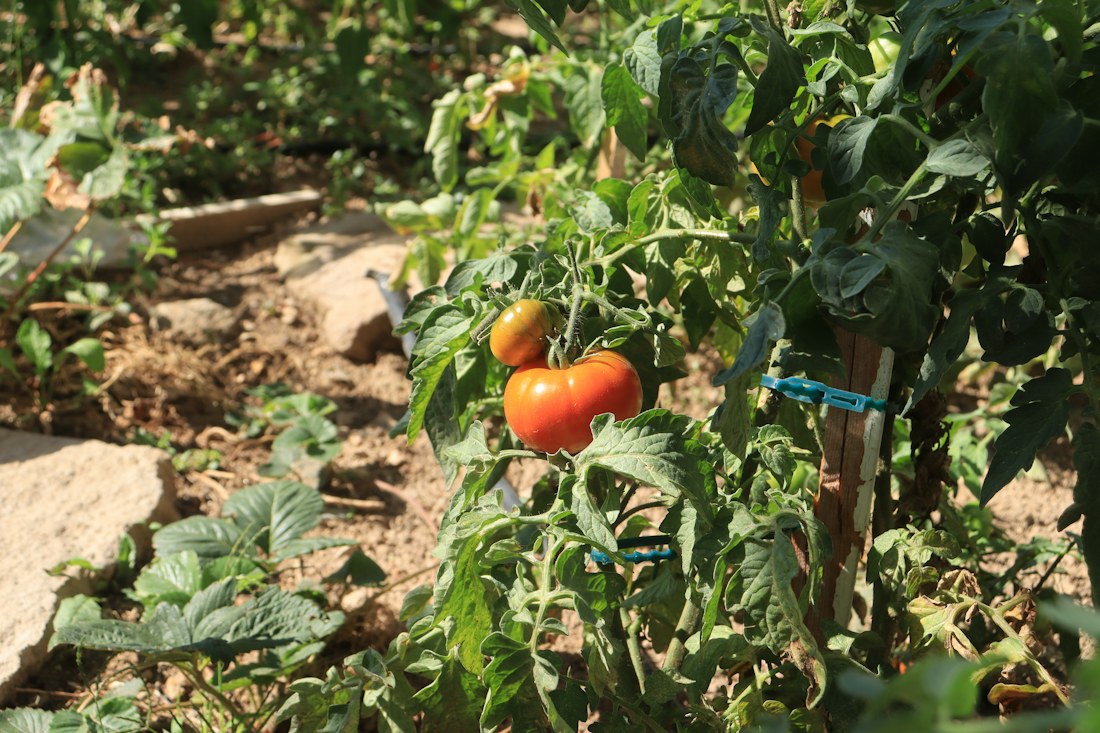
Tomato leaves can droop on a hot afternoon even when soil moisture is adequate. The top of a garden bed can also look dry while the roots are still in damp soil. Before watering, inspect the growing medium instead of relying on the appearance of the plant or the day of the week.
Why check below the surface?
The University of Minnesota Extension tomato guide recommends soaking the soil thoroughly when water is needed and using a trowel to see how deeply water has penetrated. Shallow watering can encourage roots near the surface and make plants more vulnerable to drying.
How to check a garden-bed tomato
- Move mulch aside if present and identify the general root area.
- Use a finger or small trowel to inspect below the surface without damaging roots.
- Check whether the soil is dry and crumbly, evenly moist or saturated.
- Compare the result with recent rain, heat and the plant’s stage.
- If the root zone is dry, water slowly and recheck that moisture has reached an appropriate depth.
Soil textures feel different. Sandy soil may lose moisture quickly, while clay-rich soil can remain wet below a crusty surface. The goal is to judge the actual root conditions rather than assume all beds should feel alike.
How to check tomatoes in containers
Small containers can dry faster than garden beds in sun and wind. The University of Minnesota’s container plant guidance discusses differences in watering and nutrient management. Inspect the mix at more than one depth and check that excess water has somewhere to drain.
When not to water immediately
If the soil is already wet and the plant looks unhealthy, more water is not automatically helpful. Check drainage, heat stress, root condition and other symptoms. Persistent wilting in wet conditions deserves investigation.
Our tomato watering guide explains why frequency changes. The daily watering checklist helps gardeners decide what to check before acting.
Use a simple before-and-after observation
Write down when you checked, how moist the soil felt, whether you watered and what happened the following day. After a few checks, you can begin to recognize how that bed dries in different weather.