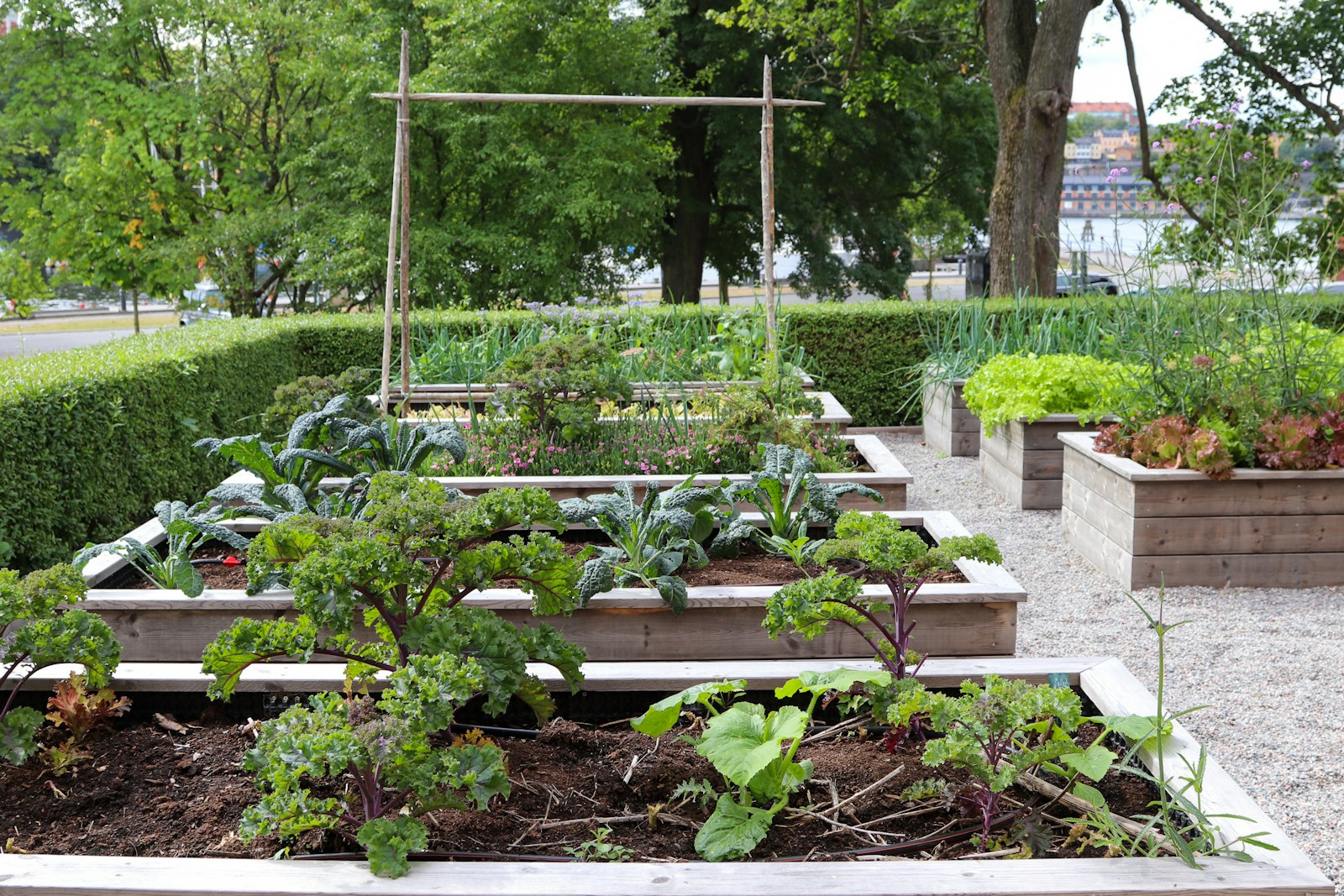
A north-facing vegetable garden can be productive in some locations, but its address on the compass is not enough to tell you what will grow. The real questions are how many hours of direct sun the beds receive, what blocks it and how the exposure changes through the season.
North-facing does not always mean full shade
A bed tight against the north side of a tall building may receive very little direct sunlight. A larger yard that slopes or opens to the east and west might get useful morning or evening light. Trees, fences, neighbouring buildings and seasonal sun angles can change the answer.
Iowa State University Extension notes that sites beside the north side of buildings can be heavily shaded. In its edible plants in shady areas guide, it advises choosing crops for measured exposure rather than expecting good results in deep shade.
Map your light before buying seeds
- Observe the proposed bed at several times on a clear day.
- Record when sunlight reaches leaves or soil directly, not just whether the area looks bright.
- Repeat the check once trees are fully leafed out.
- Mark the brightest corners separately from persistent shadow.
- Consider pots that could move into a sunnier area if space is limited.
Try leaves before fruit
Lettuce, spinach, Swiss chard and some other leafy crops are better candidates for limited direct light than tomatoes, peppers or squash. However, “shade tolerant” still does not mean “thrives without sun.” Growth and harvest can be slower or smaller than in a sunnier bed.
The Iowa State Extension partial-shade guidance identifies leafy greens as candidates for several hours of direct sun, while most vegetables perform best with at least six hours. Do not use those hours as an automatic guarantee of yield.
What about containers and raised beds?
A container can help if it lets you move the plant into a brighter part of the property. Raising a bed does not remove a building’s shadow, although good soil and drainage are still helpful. Avoid concentrating on a new raised bed’s appearance while overlooking the light it receives.
A practical first-season test
Start with one or two leafy greens and record their exposure, planting dates and harvest quality. If growth is weak despite reasonable soil and moisture, compare the sunnier and shadier locations before adding fertilizer or watering more.
Use the broader vegetables that grow in shade guide for crop comparisons. The related sun-exposure record can help you use the best spots deliberately next year.